
Winter in Fairfield County puts unique pressure on residential plumbing systems. In our area, burst pipes are one of the most disruptive plumbing emergencies homeowners face—often occurring with little warning and causing damage that spreads quickly through walls, ceilings, and floors.
Homes in these communities vary widely in age and design. Older construction, renovated interiors, finished basements, and multi-level layouts all increase the chances that plumbing is exposed to cold air in ways that aren’t immediately obvious. When temperatures drop and remain below freezing overnight, pipes in less-used or poorly heated areas can fail before homeowners realize there’s a problem.
This guide is designed to help homeowners understand why burst pipes happen, what warning signs to watch for, what to do immediately if one occurs, and when it’s time to call a professional plumber.
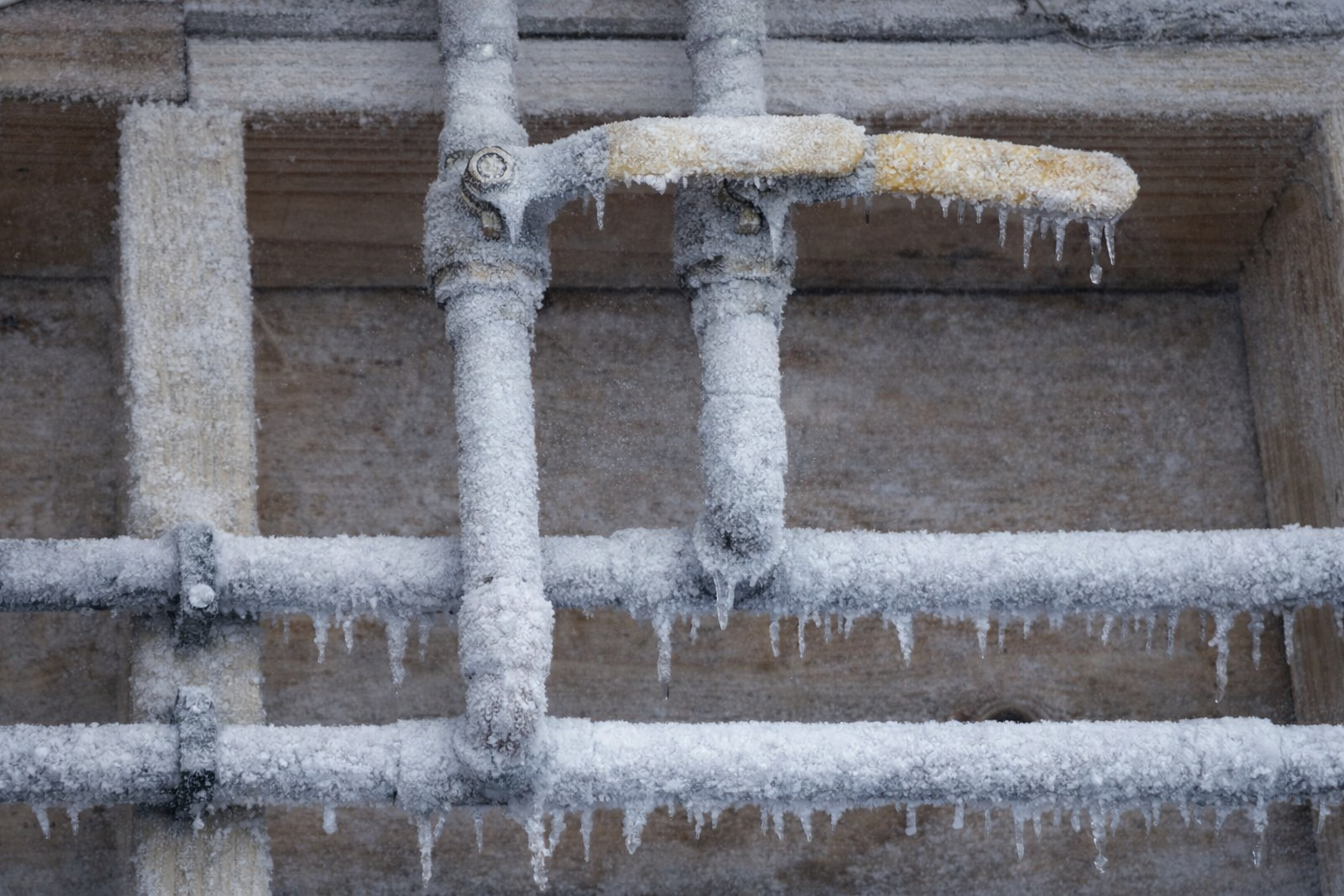
Why burst pipes happen
Burst pipes are rarely caused by a single issue. Most failures occur when several conditions combine over time.
Freezing temperatures and trapped water
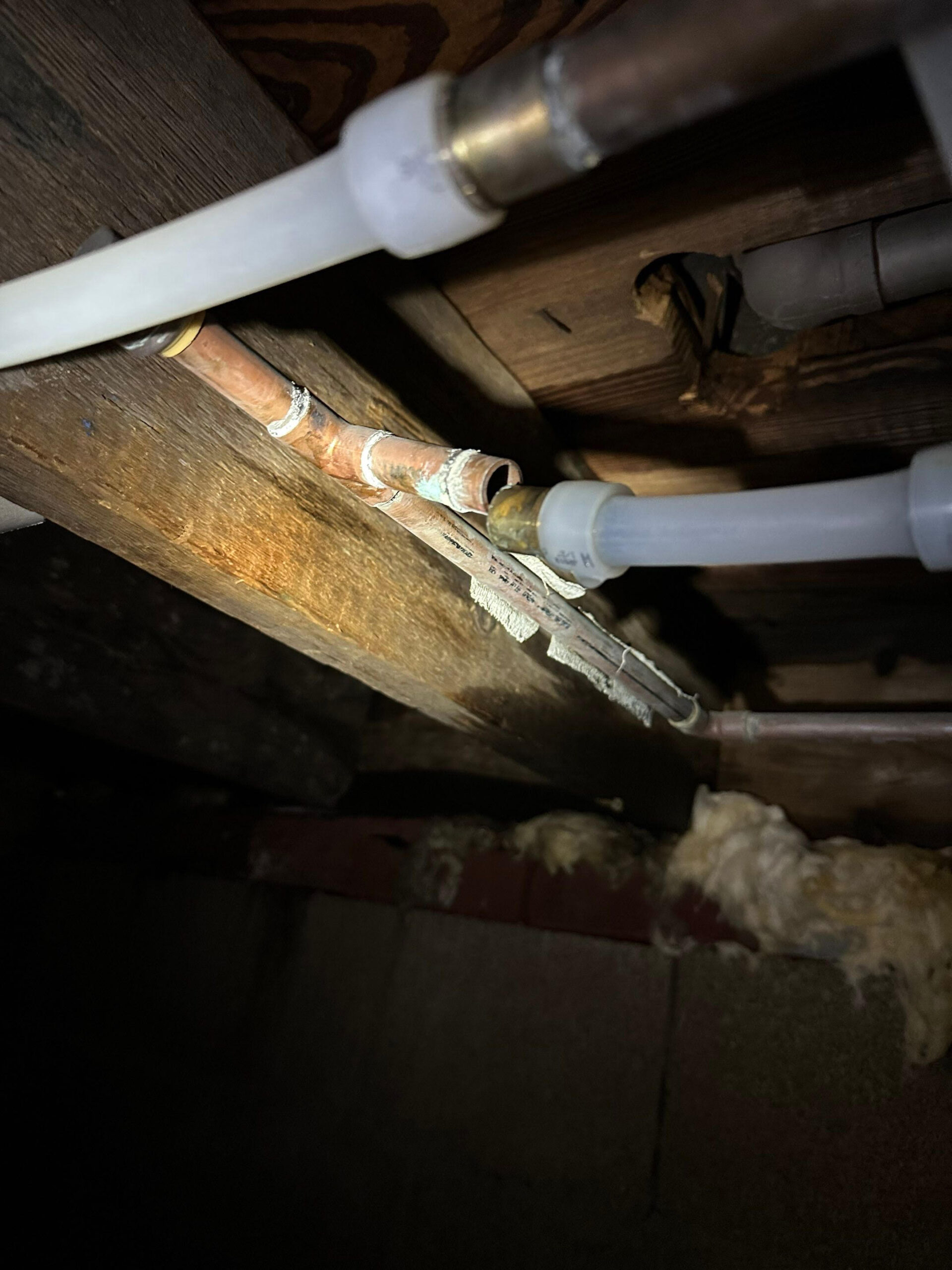
When water freezes inside a pipe, it expands. That expansion creates pressure along the pipe walls and joints. Pipes don’t usually burst where the ice forms—failure often happens at a weaker section nearby, sometimes hidden behind walls or ceilings.
Older plumbing materials
Many Greenwich and Stamford homes still have older plumbing components or sections of original pipe connected to newer materials. Aging pipes are more vulnerable to pressure changes, corrosion, and stress during freeze-thaw cycles.
Inconsistent heating patterns
Homes with zone heating, finished basements, garage-adjacent plumbing, or rooms that aren’t used daily may have uneven temperatures. Pipes in these areas cool faster and stay cold longer, increasing risk during extended cold snaps.
Renovations and concealed plumbing
Renovated homes often have plumbing hidden behind finished surfaces. While this looks clean, it can make it harder to detect cold spots, small leaks, or early warning signs before a pipe fails.
Early warning signs that often appear before a pipe bursts
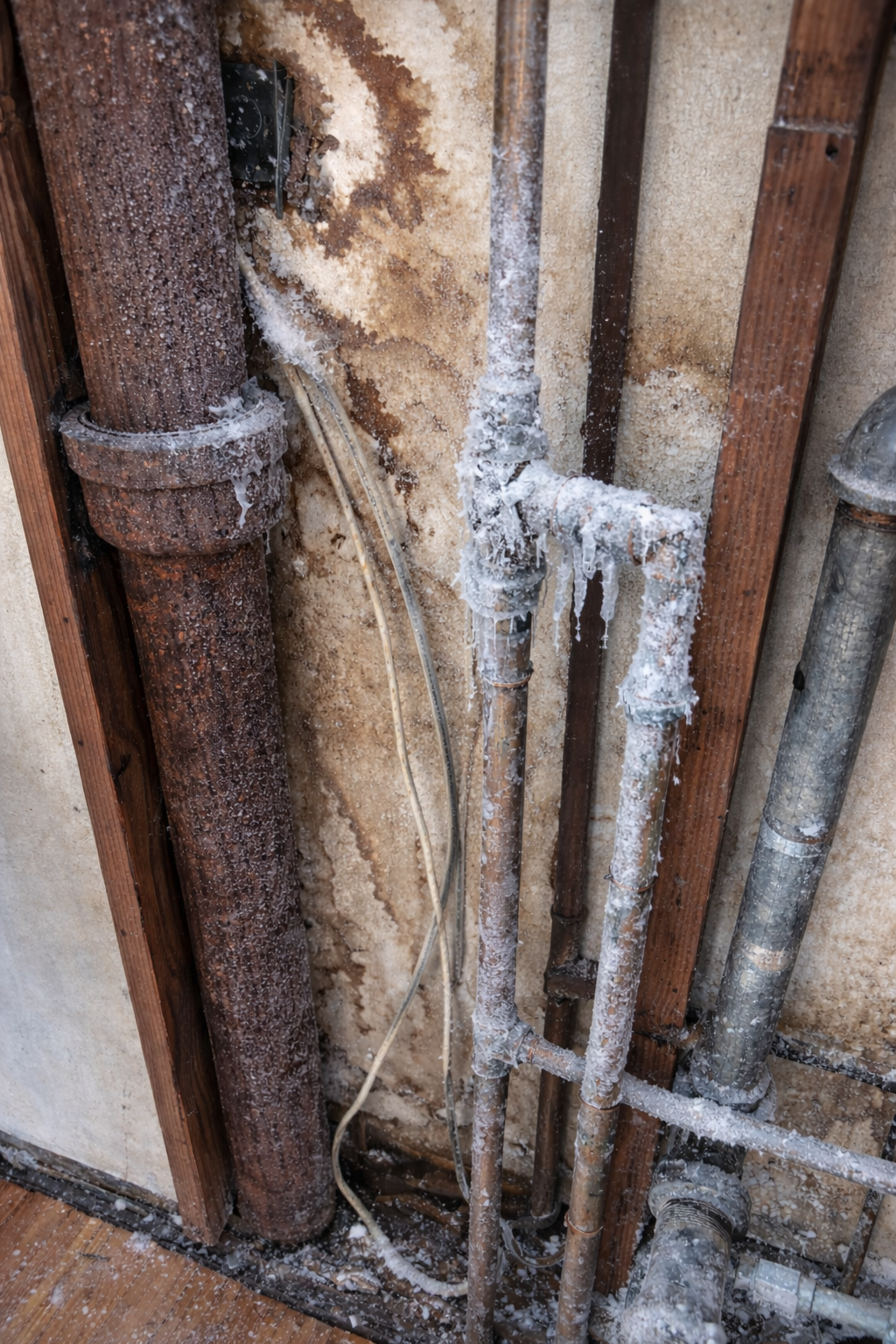
Many homeowners assume a pipe failure happens instantly, but warning signs often appear first. Recognizing them early can prevent a much larger problem.
Common signs include:
-
Sudden drops in water pressure
-
Water that sputters or stops flowing at one fixture
-
Unusual noises behind walls when water is running
-
Damp drywall, bubbling paint, or ceiling discoloration
-
Frost on exposed pipes in basements or utility rooms
In multi-level Greenwich and Stamford homes, water may appear far from the source—especially below bathrooms, kitchens, or laundry rooms.
What to do immediately if a pipe bursts
When a pipe bursts, quick action can significantly reduce damage.
Step 1: Shut off the main water supply
This is the most important first step. Continued water flow can turn a manageable situation into extensive damage within minutes.
In many homes, the shutoff is located near where the water line enters the foundation, in a basement mechanical area, or near the water heater. If you live in a condo or multi-unit building, you may need to contact building management.
Step 2: Consider electrical safety
If water is pooling or has reached lower levels, avoid areas near outlets or electrical panels. Turn off power to affected areas if it can be done safely.
Step 3: Limit water spread
Once the water is off and the area is safe:
-
Move belongings away from wet areas
-
Place towels or containers under active drips
-
Open doors and closets to improve airflow
-
Use fans if electricity is not at risk
These steps help slow damage while you assess next actions.
How plumbers repair burst pipes
Professional repair depends on where the pipe failed, the material involved, and how accessible it is.
Common plumbing repair approaches include:
-
Replacing damaged pipe sections
-
Installing couplings or fittings to restore flow
-
Rerouting vulnerable plumbing away from cold zones
-
Addressing underlying pressure or insulation issues
A licensed plumber will also check surrounding sections of pipe to make sure no additional weak points are present.
When to call a plumber vs. when to wait
You should call a plumber immediately if:
-
Water continues leaking after shutoff attempts
-
Pipes burst inside walls, ceilings, or floors
-
You’re unsure where the failure occurred
-
Multiple fixtures are affected
-
Water pressure doesn’t return after thawing
Even if the leak appears small, hidden moisture can cause long-term issues if not addressed properly.
Preventing burst pipes in future winters
Prevention in Greenwich and Stamford homes often comes down to consistency and awareness.
Helpful steps include:
-
Keeping indoor temperatures steady overnight
-
Avoiding shutting the heat off in unused rooms
-
Opening sink cabinets during extreme cold
-
Insulating exposed pipes in basements and garages
-
Draining exterior lines before winter travel
FEMA provides helpful winterization guidance for homeowners.
The American Red Cross also offers homeowner-friendly guidance on winter pipe safety.
Local considerations for Greenwich and Stamford properties
Greenwich and Stamford include a wide mix of housing styles—from historic homes with original plumbing routes to modern renovations with concealed systems, as well as condos and multi-unit buildings where water can affect neighboring units quickly.
Garage-adjacent plumbing, finished lower levels, and uneven heating patterns increase risk during prolonged cold snaps, particularly overnight.
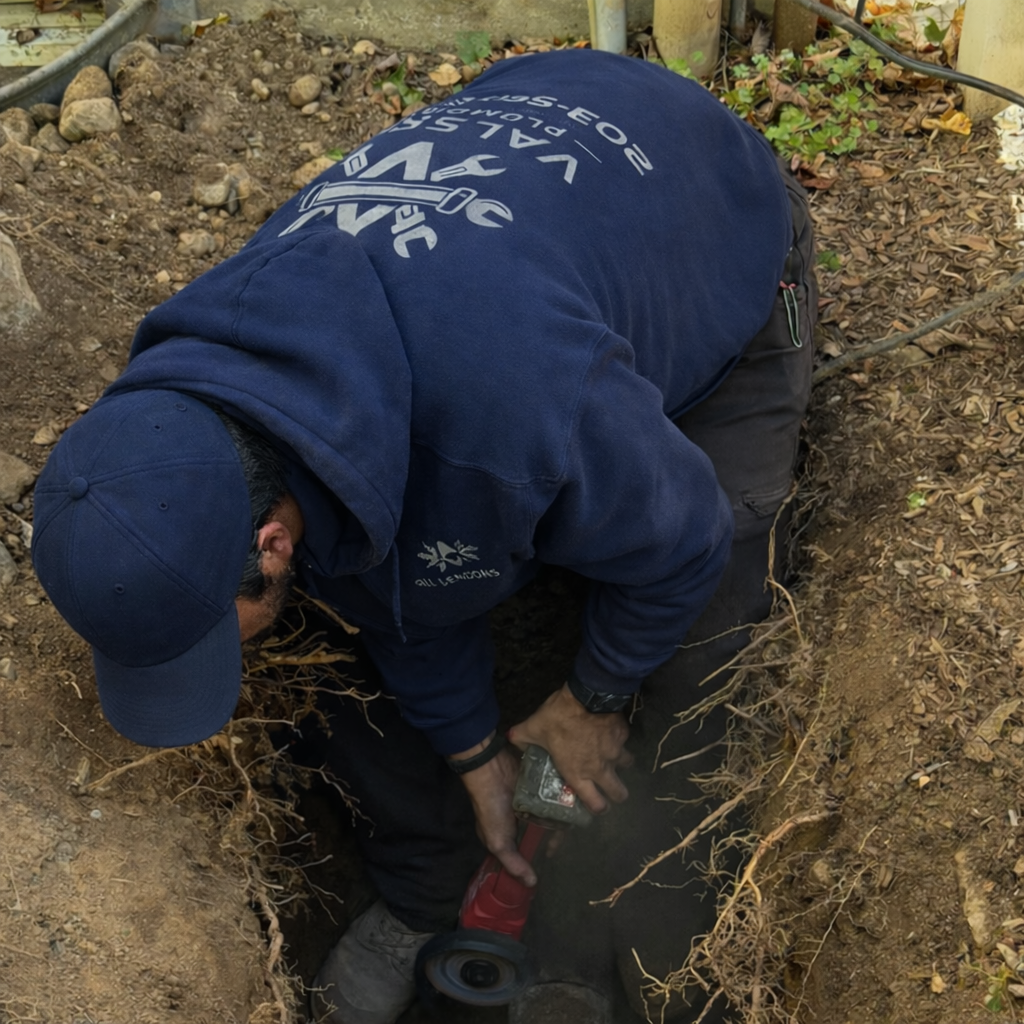
When winter plumbing issues arise, working with a local professional who understands Greenwich and Stamford homes makes a difference. Valerio Plumbing provides responsive, knowledgeable plumbing services tailored to local housing conditions, whether you’re dealing with an active pipe failure or looking to reduce future risk, and you can reach them at (203) 515-8455.
Looking for more storm preparedness tips? Click here for 4 Tips for Protecting Your Home from Winter Storm Damage from our friends at PuroClean of Greenwich | Stamford.