
Every year on International Women’s Day, we celebrate the achievements, resilience, and leadership of women around the world. At OrthoConnecticut, this day holds special meaning.
Orthopedic surgery has historically been one of the most male-dominated specialties in medicine. Today, we are proud to have three exceptional women orthopedic surgeons on our team, alongside many talented women across our clinical, surgical, and administrative departments. Their presence represents progress, leadership and opportunity for the next generation of physicians.
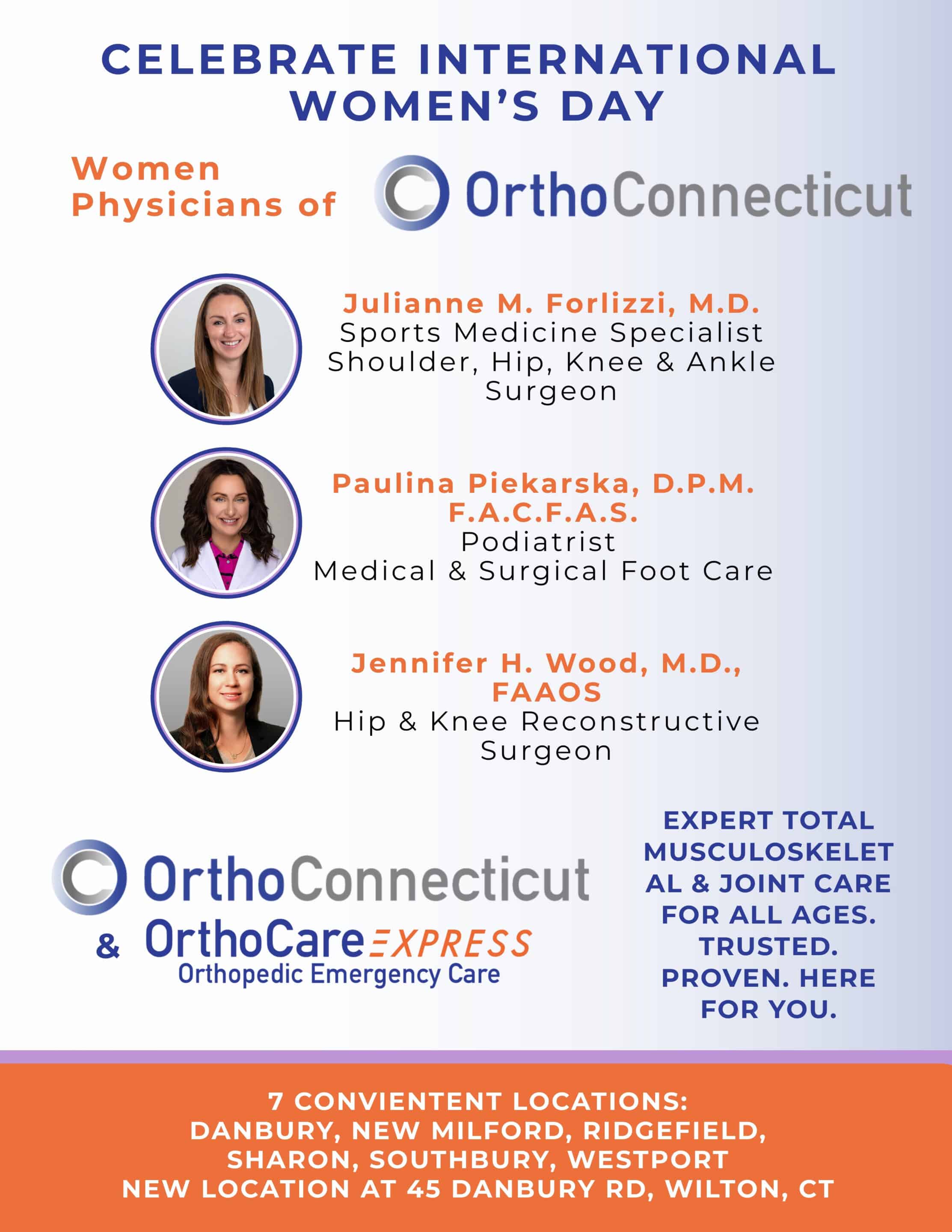
Breaking Barriers in Orthopedics — and Advancing Women’s Health
Women remain underrepresented in orthopedic surgery nationwide. The path into this specialty requires years of rigorous training, resilience, and dedication — and our physicians have excelled in meeting those demands.
Our women orthopedic specialists include:
Julianne M. Forlizzi, M.D. — Sports Medicine Specialist and Shoulder, Hip, Knee & Ankle Surgeon
Paulina Piekarska, D.P.M., F.A.C.F.A.S. — Podiatrist and Medical & Surgical Foot Care Specialist for Adults and Children
Jennifer H. Wood, M.D., FAAOS — Hip & Knee Replacement Specialist and Robotic and Anterior Hip Replacement Expert
Paulina Piekarska, D.P.M., F.A.C.F.A.S. — Podiatrist and Medical & Surgical Foot Care Specialist for Adults and Children
Jennifer H. Wood, M.D., FAAOS — Hip & Knee Replacement Specialist and Robotic and Anterior Hip Replacement Expert
Beyond representation, their work also supports greater awareness of musculoskeletal conditions that disproportionately affect women — particularly osteoporosis.
Strong Women. Strong Bones.
Women are significantly more likely than men to develop osteoporosis, especially after menopause when estrogen levels decline and bone loss accelerates. According to the National Osteoporosis Foundation, millions of women live with low bone density — often without realizing it. Because bone loss occurs silently, osteoporosis is frequently diagnosed only after a fracture occurs. Early awareness and prevention are critical.
5 Ways Women Can Strengthen Their Bones
1. Prioritize Weight-Bearing Exercise
Activities such as walking, jogging, dancing, stair climbing, and tennis stimulate bone formation and help maintain bone density.
Activities such as walking, jogging, dancing, stair climbing, and tennis stimulate bone formation and help maintain bone density.
2. Incorporate Strength Training
Resistance exercises like weight training or resistance bands increase the load on bones, helping them grow stronger. Aim for strength training two to three times per week.
Resistance exercises like weight training or resistance bands increase the load on bones, helping them grow stronger. Aim for strength training two to three times per week.
3. Ensure Adequate Calcium Intake
Women ages 19–50 typically need about 1,000 mg of calcium daily, increasing to 1,200 mg after age 50. Dairy products, leafy greens, fortified foods, and supplements (if recommended) can help meet these needs.
Women ages 19–50 typically need about 1,000 mg of calcium daily, increasing to 1,200 mg after age 50. Dairy products, leafy greens, fortified foods, and supplements (if recommended) can help meet these needs.
4. Maintain Healthy Vitamin D Levels
Vitamin D helps the body absorb calcium effectively. Sun exposure, fortified foods, fatty fish, and physician-recommended supplements can help maintain appropriate levels.
Vitamin D helps the body absorb calcium effectively. Sun exposure, fortified foods, fatty fish, and physician-recommended supplements can help maintain appropriate levels.
5. Reduce Fall Risk
Balance exercises such as yoga or Pilates, core strengthening, proper footwear, and home safety adjustments can significantly reduce fracture risk later in life.
Balance exercises such as yoga or Pilates, core strengthening, proper footwear, and home safety adjustments can significantly reduce fracture risk later in life.
When Should Women Begin to Worry About Osteoporosis?
Osteoporosis is often called a “silent disease” because symptoms usually appear only after a fracture.
Medical guidelines generally recommend:
Discussing bone health with a physician beginning in your 40s, especially if risk factors are present
Routine bone density screening around age 65
Earlier screening may be recommended if you:
Experience early menopause
Have a family history of osteoporosis
Have had a fracture after age 50
Take long-term corticosteroids
Have a smaller body frame or low body weight
Smoke or drink alcohol excessively
Signs that warrant evaluation include fractures from minor falls, loss of height, persistent back pain, or noticeable changes in posture. A bone density (DEXA) scan can detect bone loss early, allowing treatment that helps prevent fractures and preserve mobility and independence.
Celebrating the Women Who Keep Us Moving
On International Women’s Day, we also recognize the many women across our organization — physician assistants, surgical technologists, medical assistants, front desk coordinators, billing specialists, and administrators — whose dedication supports every patient we serve. We celebrate the women in our community as well: mothers, daughters, athletes, professionals, and caregivers who inspire us with their strength and resilience.
Strong communities begin with strong, healthy women. Protecting bone and joint health through exercise, proper nutrition, early screening, and prevention helps preserve mobility, independence, and long-term wellbeing. If you are experiencing joint pain, back pain, stress fractures, or concerns about bone health, our team is here to help with expert evaluation and compassionate orthopedic care at every stage of life. Today and every day — we are proud to stand beside the women in our community.
Visit www.myorthoct.com or call 203-845-2200 to schedule an appointment